
How Ice Dams Form on Northeast Ohio Roofs (and How to Stop the Damage)
September 23, 2026
•
Written By
4 Seasons Construction & Roofing
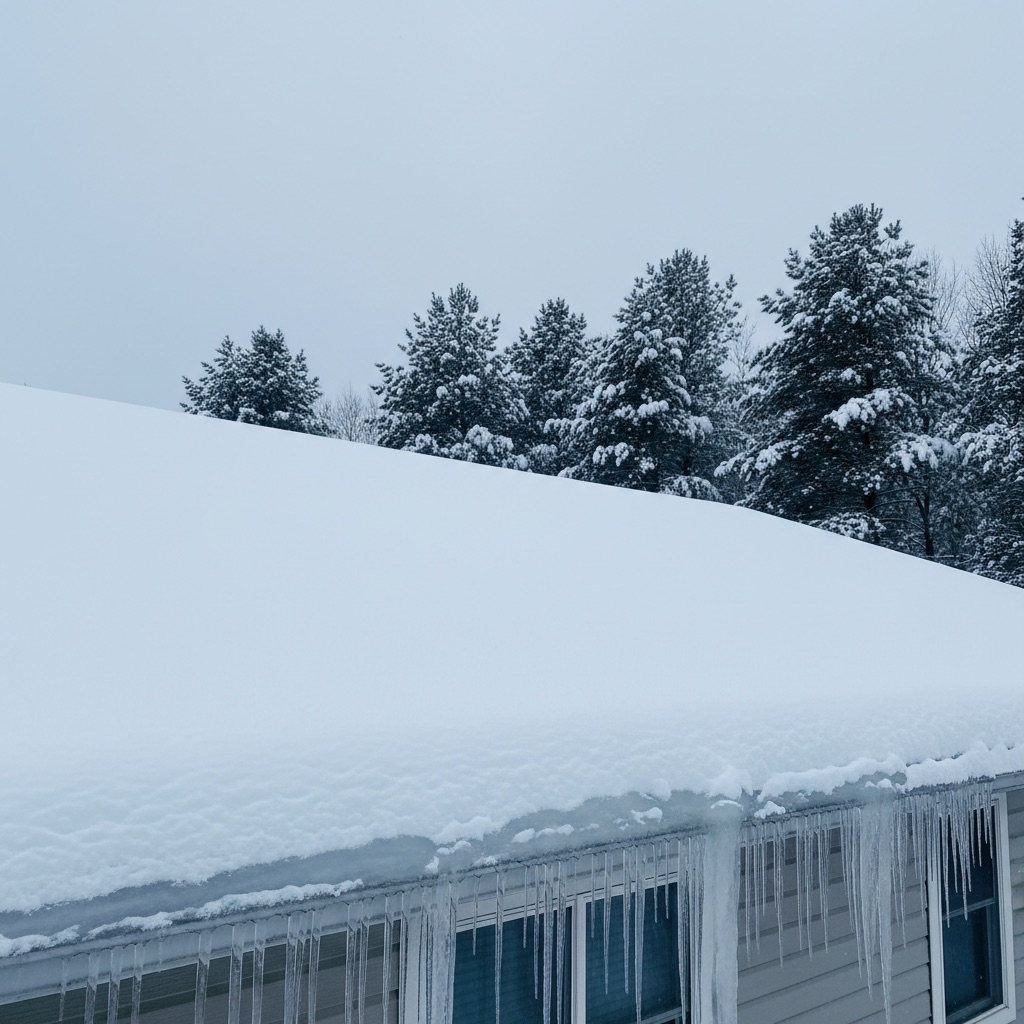
Ice dams form when heat escaping into your attic melts the snow on your roof, the meltwater runs down to the cold edges, and it refreezes into a ridge of ice that traps everything behind it. In Northeast Ohio, and especially in the Geauga County snowbelt, that cycle plays out again and again through winter, which is why the region is prime ice-dam country. The good news is that once you understand how a dam forms, you can stop the damage before it reaches your ceilings.
Most homeowners do not notice an ice dam until late January or February, when a brown ring appears on a ceiling or water starts dripping near an exterior wall. By then the ice has usually been working against the roof for weeks. Here is what is actually happening up there, and how to keep it from costing you.
What Is an Ice Dam?
An ice dam is a wall of ice that builds up at the edge of a roof and blocks melting snow from draining off. Snow on the upper part of the roof melts, the water flows down toward the eaves, and when it hits the colder roof edge it freezes again. Each melt-and-refreeze cycle adds to the ridge until it forms a dam, and water pools behind it with nowhere to go but back up under the shingles.
That trapped water is the real problem. Shingles are designed to shed water flowing downhill, not to hold back a standing pool being pushed uphill. Once water gets under them, it reaches the roof deck and finds its way inside.
Why Lake-Effect Snow Makes It Worse Here
Northeast Ohio does not get average winters. Communities like Chardon and the rest of Geauga County sit in the snowbelt, where moisture off Lake Erie turns into heavy, persistent lake-effect snow. Chardon regularly records well over 100 inches of snow in a season, ranking it among the snowiest towns in the state.
More snow means more of everything that builds a dam. The snowpack sits deeper and lasts longer, feeding a steady supply of meltwater. Temperatures swing above and below freezing repeatedly, so the melt-and-refreeze cycle runs more often than it would in a milder climate. A roof that might never see a dam elsewhere in Ohio can grow one every winter here.
The Damage an Ice Dam Does
The visible ice is not what hurts. The hidden water is. When water backs up under your shingles, it can soak into the roof deck, drip into the attic, and saturate insulation, which quietly loses its ability to keep your home warm. From there it moves into the living space, staining ceilings, blistering paint, warping trim, and feeding mold inside wall cavities where you cannot see it.
The weight is a factor too. Heavy ice at the eaves can bend gutters, tear them away from the fascia, and damage the roof edge. What starts as a row of icicles can turn into a repair bill that spans the roof, the gutters, and several rooms inside the house.
Why You Should Never Let Someone Chip It Off
When water is coming in, the temptation is to get the ice off fast by any means. That is exactly how roofs get wrecked. Chipping and pounding with hammers, axes, or shovels cracks shingles, dents gutters, knocks flashing loose, and can void your roofing warranty. You clear the ice and create a new set of leaks for spring.
There is a safer way. Professional steam ice dam removal melts the ice off instead of prying it loose, so the roof underneath is never struck or scraped. It is the method serious ice-dam specialists rely on precisely because it protects the roof while it clears the ice.
How Steam Removal Protects Your Roof
Steam removal uses a machine built specifically for the job, an Arctic Steamer by American Pressure, which delivers low-pressure steam at roughly 290 degrees. The heat cuts through the ice on contact and lifts it away from shingles, valleys, and gutters without any impact tools. Because it works with heat rather than force, it keeps clearing ice even well below freezing, and it puts less water around your home than hacking away by hand.
The result is a clear roof edge, an open drainage path, and shingles, gutters, and flashing that are in the same shape they were before the ice arrived. That is the whole point: get the ice off without trading it for roof repairs.
How to Reduce Ice Dams Long-Term
Removing a dam solves the emergency, but the lasting fix is keeping the roof deck cold and evenly temperatured so snow melts uniformly instead of refreezing at the edges. A few steps do most of the work:
- Seal and insulate the attic. Stopping warm air from reaching the roof deck is the single most effective defense against ice dams.
- Improve attic ventilation. Balanced intake and exhaust airflow keeps the deck cold and carries away moisture that would otherwise condense.
- Keep gutters clear and draining. Clean, well-pitched gutters give meltwater somewhere to go instead of pooling and freezing at the eaves.
- Address worn shingles and tired flashing before winter. Small gaps that shrug off summer rain become entry points once ice forces water uphill.
A fall inspection is the easiest way to catch these issues while the roof is dry and accessible. An experienced local roofing team can look at the whole system, not just the shingles, and tell you where your home is vulnerable before the first heavy snow. Homeowners across Chardon and Geauga County who plan ahead tend to have far quieter winters.
Frequently Asked Questions
What actually causes ice dams to form?
Heat loss into the attic is the usual culprit. Warm air melts the snow on the upper roof, the meltwater runs to the cold eaves and refreezes, and repeated cycles build a ridge of ice that traps more water behind it. Insulation, ventilation, and roof edge details all play a role.
Are ice dams covered by homeowners insurance?
Many policies cover sudden interior water damage caused by an ice dam, but coverage varies and long-term neglect is often excluded. Review your policy, document any damage with photos, and keep in mind that preventing a dam is almost always cheaper than filing a claim.
Can I remove an ice dam myself?
Light snow near the edge can be pulled down with a roof rake from the ground, but climbing onto an icy roof is dangerous, and chipping at the ice can crack shingles and void your warranty. For an established dam, professional steam removal is the safe choice.
When should I get my roof inspected for ice-dam risk?
Early to mid fall is ideal, before the first heavy snow. That leaves time to fix insulation, ventilation, flashing, or gutter issues while the roof is still dry and easy to work on.
Protect Your Home From Ice Dam Damage
If ice is already building on your roof or water is showing up inside, do not let anyone chip at your shingles. Call 4 Seasons Construction & Roofing and we will steam it off safely.
Call now: (440) 286-1618. If your roof is not in trouble yet, you can schedule a free estimate to have it checked before the next heavy snow.
Recent Articles
Residential Roofing
How Ice Dams Form on Northeast Ohio Roofs (and How to Stop the Damage)
How ice dams form on Northeast Ohio and Geauga County roofs, the hidden damage they cause, and how safe steam removal plus better insulation keep your home dry all winter.
September 23, 2026
Residential Roofing
Roof Insurance Claims in Ohio: What Homeowners Should Expect
A calm, honest walkthrough of the roof insurance claim process for Northeast Ohio homeowners, from documenting damage to working with your adjuster and contractor.
September 14, 2026
Residential Roofing
How Ohio Winters and Lake-Effect Snow Affect Your Roof
A Geauga County homeowner's guide to how lake-effect snow, ice dams, and freeze-thaw cycles stress your roof, and the steps that keep it protected all winter.
September 14, 2026

How to Choose a Local Family Roofer in Northeast Ohio (and Spot a Storm Chaser)
How Northeast Ohio homeowners can tell a trustworthy local family roofer from a door-knocking storm chaser, and the questions that reveal the difference.
September 14, 2026